PDF Ebook Against the Grain : A Deep History of the Earliest States, by James C. Scott
nous fonctionnalité pour lire une nouvelle publication qui vient ces derniers temps. Oui, c'est une nouvelle publication à venir que de nombreuses personnes souhaitent vraiment revoir vous être juste l'un d'eux? Évidemment, vous devez être. Il ne sera pas vous faire sentir vraiment si difficile de profiter de votre vie. En outre, certaines personnes supposent que l'analyse est difficile à faire, vous devez vous assurer que vous pouvez le faire. Dur sera vraiment ressenti quand vous avez pas de concepts concernant exactement quel type de publication pour vérifier. Ou parfois, votre produit d'analyse est intriguent suffisante.
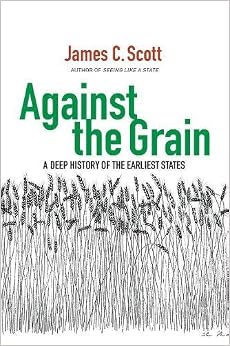
Against the Grain : A Deep History of the Earliest States, by James C. Scott

PDF Ebook Against the Grain : A Deep History of the Earliest States, by James C. Scott
Lorsque vous êtes pressé de la date d' échéance de l' emploi et aussi pas de concept pour obtenir la motivation, Against The Grain : A Deep History Of The Earliest States, By James C. Scott livre est entre vos options à prendre. Réserve Against The Grain : A Deep History Of The Earliest States, By James C. Scott va certainement vous offrir la ressource appropriée et le point d'obtenir inspirations. Il est non seulement sur les travaux de la société politique, l' administration, l' économie, ainsi que d' autres. Certaines tâches achetées faire quelques fiction œuvres exigent également des inspirations pour obtenir les travaux. Comme ce dont vous avez besoin, ce Against The Grain : A Deep History Of The Earliest States, By James C. Scott sera peut - être votre option.
La présence de cette publication est non seulement reconnu par le peuple du pays. cultures De nombreux pays de l'extérieur vont adorer plus ce livre comme source de lecture. Le sujet fascinant et aussi tourner le sujet classique dans l'un des tout doit gérer la lecture de ce livre. Against The Grain : A Deep History Of The Earliest States, By James C. Scott vient en outre avec l'emballage du produit intéressant à partir de la mise en page de couverture et aussi son titre, exactement comment l'auteur amène les lecteurs à obtenir des mots, et exactement comment l'écrivain dit le contenu Web attrayant.
Quand certaines personnes croient que c'est un livre difficile à examiner, nous allons certainement vous informer qu'il devient l'une des idées plus intelligentes pour trouver quelque chose de différent. Les différents points du Against The Grain : A Deep History Of The Earliest States, By James C. Scott avec d'autres publications sont durables sur le chemin à quel point l'auteur improvise et aussi choisir le sujet en général et de façon surprenante. Il sera hors du temps et sans fin pour faire tous les gens se sentent vraiment parés et impressionné de cette publication.
Lorsque vous avez besoin vraiment comme votre source, vous pouvez trouver actuellement et aussi ici, en trouvant le lien web, vous pouvez visiter et commencer également l'obtenir en enregistrant dans votre propre outil de système informatique ou déplacer à un autre outil. En obtenant le lien, vous obtiendrez que les données douces de Against The Grain : A Deep History Of The Earliest States, By James C. Scott est conseillé d'être en fait une partie de vos activités de loisirs. Il est clair aussi grande suffisante pour vous voir sentez vraiment si impressionnant pour obtenir guide pour vérifier.
Détails sur le produit
Relié: 312 pages
Editeur : Yale University Press; Édition : 1 (1 septembre 2017)
Langue : Anglais
ISBN-10: 0300182910
ISBN-13: 978-0300182910
Dimensions du produit:
2,5 x 15,2 x 22,9 cm
Moyenne des commentaires client :
4.6 étoiles sur 5
3 commentaires client
Classement des meilleures ventes d'Amazon:
161.354 en Livres (Voir les 100 premiers en Livres)
Professeur de sciences politiques à Yale, spécialiste en sociétés agraires, James C. Scott nous emmène dans un voyage multi-disciplinaire. Il passe en revue quelques dizaines de millénaires d'histoire du genre homo pour développer un argumentaire sur la naissance des premiers états. Sa thèse : ce ne sont pas le sédentarisme ni l'agriculture qui sont à l'origine de ceux-ci mais les céréales! Les sociétés pré-étatiques n'avaient pas besoin de surplus autre que celui qui servait à faire le joint entre les périodes de plus ou moins grande abondance ou éventuellement à échanger (oui, il n'y a pas besoin de civilisation pour faire du commerce). C'est uniquement lorsque qu'il a fallu financer des organisations proto-étatiques par une confiscation du surplus (par et pour des élites guerrières ou religieuses) par l'impôt que la culture des céréales s'est intensifiée, et avec elle l'élevage, malgré tous les maux liés à cette évolution (intensification du travail, épidémies, hiérarchisation de la société et violence qui vont avec). Le gros avantage de certaines céréales ? Elles ont un très bon rendement à défaut d'avoir une valeur nutritive élevée, murissent à un moment défini, sont visibles (contrairement aux tubercules et autres racines), se conservent très bien et surtout, sont facilement divisibles. Toutes qualités importantes si l'on peut envoyer des agents pour prélever une taxe. L'illustration par la dîme du quatrième chapitre est très parlante.Non, les premières civilisation mésopotamiennes ou chinoises (et à leurs suite bien d'autres empires) n'étaient pas des phares vers lesquels se précipitaient les chasseurs-cueilleurs ou nomades avides de prospérité et de culture, mais plutôt de grosses machines inefficaces basées sur la contrainte (travail forcé, contrôle de la reproduction - des animaux et des femmes!). Oui, ceux qui pouvaient se soustraire à ce mode de vie le faisaient souvent. Et oui, l'histoire est toujours écrite par les vainqueurs, surtout ceux qui laissent des traces bien visibles et qui se conservent (l'écriture, les monuments, les canaux d'irrigation, les objets).Le dernier chapitre, sur l'Age d'Or des barbares, est particulièrement éclairant. En un peu plus de 250 pages, impeccablement argumentées, Scott développe une vision un brin provocante mais parfaitement plausible. Vivement une traduction en français!
Cela fait du bien de revisiter l'histoire, surtout lointaine. C'est ce à quoi invite ce livre passionant
Intérêt pour le sujet
This outstanding book, by the anarchist-tending academic James C. Scott, might be (but isn’t) subtitled “Barbarians Are Happier, Fatter and Better Looking.†The author does not believe the myth of the noble savage—but he thinks the savage is, on average, a lot better off than the peasant. Scott’s project is to remold our view of the early days of civilization, erasing the sharp lines usually drawn to separate the first states from the social groups which preceded them, and dismissing the judgment that more organized is always better.“Against the Grain†is erudite, smoothly written, and gives the reader a lot of food for thought—not just about how to view early states and other social groupings, but also about how human flourishing should be viewed and understood. Should we prize the material and cultural milestones generated by a society, even if they come at the price of hardship for most, commanded by elites who appropriate their output? Or should our touchstone be the immediate happiness of the masses, even if what the society produces is therefore utterly unmemorable and does not advance mankind? That is—in what does human “flourishing†consist? These are issues that Scott only touches on, but it seems to me they necessarily arise from his arguments, which are not complete without answers to these questions.Most of Scott’s analysis revolves around the Mesopotamia of 3000 B.C. or so, although he touches on a few other societies of different times and places to illustrate and flesh out his points. The backbone of Scott’s book is his claim that “sedentism long preceded evidence of plant and animal domestication and that both sedentism and domestication were in place at least four millennia before anything like agricultural villages appeared.†Thus, contrary to the usual linear view of state formation, some humans settled in more-or-less one place, but did not form social groups more complex than bands, or perhaps tribes in some cases (Scott does not use the traditional group nomenclature of band, tribe, chiefdom, etc.). Therefore, the traditional story arc, of states automatically arising (though for reasons which are disputed) as soon as crops and sedentism appeared, is, Scott tells us, wholly wrong.Of course, before domesticated crops, sedentism was possible only where local conditions were ideal—that is, where what nature (modified to some degree by man, most of all by fire) provided the bounty and diversity that enabled humans to live off the land. Where this was true, though, people were able to live well for centuries, and to live much better, healthier lives than later state dwellers. (Scott is fond of referring negatively to early states, hotbeds of disease, vermin, and drudgery, as “the late Neolithic multispecies resettlement camp.â€) Alluvial plains with intermittent water flows from rivers or oceans were ideal, including southern Mesopotamia and China around the Yellow River. Such wetland societies are Scott’s main focus. “They were based on what are now called ‘common property resources’—free-living plants, animals, and aquatic creatures to which the entire community had access.†The rest of the world, of course, remained nomadic to the degree a particular locale lacked such resources.Having established that sedentary lifestyles did not immediately, or even soon, result in states, the core of Scott’s project is not just to distinguish sedentary life from state life. It is also to explode the idea that pre-state societies were somehow inferior to the first states. (Scott might even say they were not inferior to modern states, either, but he does not address that question.) In fact, sedentism itself is not necessarily forward progress, whether it ends in states or not. There is no “social will to sedentism,†and alternatives to sedentism were at this time highly varied, both in type and over time, with porous borders and frequent movement along a gradient between sedentism and nomadism, depending on everything from climatic conditions to migratory patterns of wild animals. And for most people who were not state elites, living with that variability was highly desirable, because the diversification of food sources and methods of acquisition created a much more stable, enjoyable, and healthy life environment, in most cases, than states based on a small number of grain crops requiring constant heavy labor to ensure a decent harvest. Therefore, living in a state was neither a necessary nor a desirable development, from the perspective of any individual Neolithic person.So, if four thousand years elapsed between the time people settled and when states formed in those same area, and people were getting along fine, why did states form at all? Not for Scott a Hobbesian vision of the state offering people a relief from the horror of life outside the state—on the contrary, for most people, the Hobbesian state is a step down. Scott’s project is effectively to invert Hobbes’s claim that the life of pre-state man is “solitary, poor, nasty, brutish and short†to be “social, comfortable, enjoyable, (relatively) peaceful and longer.†Scott says little about warfare among non-state peoples in Mesopotamia; I suspect he understates its prevalence, but it does appear that non-state people were better fed, and they certainly worked less. And in these naturally productive geographic areas, at least, there was no need to adopt the drudgery of agricultural labor, organized on the state level, to survive.While specific mechanics are not his focus, Scott believes instead that what drove state formation was the gradual emergence of fully domesticated grain crops. “What is required is wealth in the form of an appropriable, measurable, dominant grain crop and a population growing it that can be easily administered and mobilized.†Grain is thus the root of all state formation. No grain, no state. Scott relates the characteristics of domesticated grains, and then contrasts how those grain crops are far superior to other crops, such as tubers (cassava, potatoes) from the perspective of state administrators and tax collectors (because grain is portable, storable, and all ripens at the same time). Scott directs the Agrarian Studies Program at Yale, and he is clearly extremely knowledgeable about crops, which increases the readers interest by allowing well-chosen examples that bring the topics at hand to life. The book’s title, “Against the Grain,†is actually a double pun—first, in that the book is contrarian to received wisdom on state formation; second, in that the crux of that contrarian view is that domesticated grain is largely a negative for most early humans, because it prevented the type of egalitarian flourishing that Scott favors, rather favoring the elite and the flourishing that comes from elite dominance of the masses. But we will get to that.Scott also spends quite a bit of time on the more general process of domestication, of “niche construction.†He speculates (his word) on human parallels, suggesting that as humans domesticated crops and animals, they were also domesticating themselves, giving themselves some of the same characteristics of domesticated herd animals—including, perhaps, a reduced tendency to violence (Steven Pinker, call your office). Scott apparently raises sheep himself, and he defends sheep against those who think they have, um, sheep-like characteristics—not that they don’t have those characteristics, just that it’s not fair of us to make fun of them when we created those characteristics ourselves.Subsumed within this agrarian focus on state formation are topics on which Scott focuses in his other books, including the luminous “Seeing Like A State,†such as the importance of “legibility†of the population to the state and the tendency of the state to ignore the knowledge of people that cannot be systematized and reduced to transferable data (and therefore the inevitable failure of many state projects, especially those of “high modernismâ€). Along with grain becoming an available and dominant crop, for a state to form the population must have few options other than participating in the state, since Scott is convinced no rational person would choose to live in a state, at least as a member of the mass rather than the elite, if he had the option of a reasonable non-state life. Exit options can be constrained by simple lack of alternatives, such as no nearby place that can support a hunter-gathering lifestyle reliably, or by violence, either outside threats or the state coercing its subjects to remain in place. To the extent people cannot be constrained, and leave, they can be replenished with slaves, purchased or won in combat. Thus, the state is inherently unnatural, compared with a semi-sedentary, hunter-gatherer lifestyle.To buttress this argument, Scott notes that early states were extremely fragile. They were subject to the same stresses faced by subsistence peoples, such as climactic changes, along with additional ones, such as vastly increased risks for disease (for which increased rates of reproduction were necessary to compensate, something Scott darkly implies is bad without saying why, probably by reflex), and the results of deforestation and salinization. They also featured the tendency of elites to squeeze the population too hard in times of external crisis. Yet they lacked the flexibility of movement or dispersal that allowed subsistence peoples to react gradually and with reasonable grace to changes or problems.But Scott sees the inevitable end of fragility not so much as collapse in the sense of, say, Troy, but as “disassembly†of the state back into constituent units of subsistence people. And, critically, he does not see this as necessarily bad, or even often bad. He seems to think, though he never exactly says so, that the people are better off. After all, he’s clear that pre-state peoples find their lives worse off in states—so after a collapse, their lives must, on average, be better. “Unlike many historians, I wonder whether the frequent abandonment of early state centers might often have been a boon to the health and safety of their populations rather than a ‘dark age’ signaling collapse of a civilization.†Our view is conditioned by mostly being transmitted by two negative pieces of evidence: writings about “collapses†by those most negatively affected, and archaeological evidence of disaster. Dispersed (happy) populations with a light footprint, gamboling through the meadows, leave neither writing nor much archaeological evidence. Maybe the collapse of early states, at least, was often for the best. In fact, collapses of states don’t, in Scott’s view, even cause a deterioration in culture. “[A] collapse at the center is less likely to mean a dissolution of a culture than its reformulation and decentralization.†We will return to this bold claim below.Scott seems to march to the beat of his own drummer. His entire project, and much of his academic output, does not fit neatly into any category. “Seeing Like A State,†his best-known book, attacks as ignorant and failed most large-scale state social engineering, and should be required reading for all politicians and well-informed people. His books aren’t political books in the sense of didactic, though; they’re much more works of political anthropology. And while no conservative, he refuses to pander to political correctness, using (horrors!) terms like “mankind,†while noting in passing that Europeans didn’t originate the African slave trade, but merely “had joined the Arabs in scouring the slaving ports of the African continent for slaves.†Scott also repeatedly notes that slavery was universal among non-state peoples, contrary to the common myth that slavery is somehow a byproduct of (usually European) civilization—and, in fact, was especially common among “manpower-hungry Native American peoples.†All of these points are anathema in most academic circles today, but I suppose when you’re eighty and mighty in your field, you do what you want.Scott rejects that non-state peoples are lazy, or, in the language sometimes used, have “high time preference.†He maintains that hunter-gatherers, contrary to myth, frequently delay returns and engage in complex long-term behaviors to acquire food, rather than just stumbling across berries—in particular “mass capture†of animals during migrations, as well as sculpting the landscape through fire, weeding, and so forth. Nor are they ignorant; they know an enormous amount about their environment and the living things in it. Yes, the tempo of their lives is different, dictated by nature, but often it involves “bursts of intense activity over short periods of time.†The reader gets the impression that Scott thinks that a Mesopotamian hunter-gatherer would be a much more interesting dinner companion than a modern factory worker (which is probably correct). He cites Tocqueville’s comment upon reading Adam Smith’s “The Wealth of Nationsâ€: “What can be expected of a man who has spent twenty years of his life putting heads on pins?†In other words—the drudgery inherent in increased productivity crushes the individuality out of humans. It kills human flourishing, at least mental flourishing, for the masses.Finally, Scott sums it all up by focusing on the “Golden Age of the Barbarians.†As with much of the book, this is fascinating because it turns the focus from the way we normally think of populations outside of civilizations. As Scott repeatedly points out, until very recently (roughly 1600 A.D.), the vast majority of the human populations were “barbarian†(a term Scott explicitly uses ironically to mean merely any people outside state control). Being barbarian was, for the reasons he outlines throughout the book, much better for an individual. In fact, contrary to the usual practice, Scott ascribes the creation of many tribes (rather than bands, implicitly) not to pre-state groupings, but to those fleeing state control and becoming barbarians. And a great many barbarians didn’t just live in savagery—they merely, as with states, competed for the surplus produced by grain centers, but differently, through raiding and the imposition of tribute requirements, rather than by directly coercing the sedentary masses to produce crops. Barbarians weren’t so much uncivilized as differently civilized. The reader gets the distinct impression that Scott would be happy to have been a Gothic tribesman of, say, 400 A.D.All this is very well done. But where Scott lets the reader down somewhat is in failing to distinguish between two very different modes in which non-state early societies could be judged superior, or at least not inferior, to early states. The first, on which Scott exclusively focuses without acknowledging he is doing so, is the health and happiness of individual humans, viewed through the utilitarian frame of the greatest good for the greatest number of people alive at any given time. The second, which Scott almost totally ignores, is human accomplishment, both in its high points accomplished at great cost, and in its movement forward of the baseline of human health and happiness.Put most bluntly, is human flourishing maximized if mankind were to have remained hunter gatherers forever, not subject to states and largely free, but not advancing in any material way, or is it maximized if, through what we can stipulate is a great deal of additional suffering, the average human of a hundred or a thousand or five thousand years later is made better off, materially and culturally? Maybe an anarchist thinks the former, especially if he denies that forward progress is more likely under states (a hard argument to make with a straight face; collective accomplishment under the command of an elite is probably necessary for any real progress), and especially if he is the end point of that improvement and is looking backwards over a glass of Chardonnay bought at Costco.As a starting point to examine material and cultural progress, we can agree with Scott that overall production, GDP if you will, is greater with states. “[U]ntil the state extracts and appropriates this surplus, any dormant additional production that might exist is ‘consumed’ in leisure and cultural elaboration.†Thus, humans outside of states are producing less than they could. The problem, though, is that “cultural elaboration†here is mostly a nice word for carving bones to put through your nose—there is no evidence that non-state peoples had any culture, except in the broadest sense. Scott does not define culture, but he clearly believes that the culture of a band of humans who, several generations back, fled a city due to epidemic or invasion is by no means inferior to the culture of a city. To most people, these things cannot be compared, because one is much greater. The glory of man consists in the highest products of his culture, which, unfortunately, almost always rest to a greater or lesser degree on the suffering of others.Scott argues that Neolithic peoples were rational in avoiding states, and in fleeing them at the first sign of fragility or collapse. “The first and most prudent assumption about historical actors is that, given their resources and what they know, they are acting reasonably to secure their immediate interests.†True enough—but this is not enough to ensure the march of civilization. One can reasonably differ on whether that march is actually good—maybe we’d all be better off as subsistence collectors of shellfish, rather than as masters of nuclear weapons. Of course, there would be a lot fewer of us—not that Scott seems to think more is better, given his disapproval of state attempts to boost populations. The reader still can’t shake the feeling that, deep down, Scott wishes he were not here, but was cracking mussels on a rock, somewhere overlooking the wetland plain around what is now Basra, five thousand years ago. Like Minniver Cheevy, Scott was born too late.Yes, a Mesopotamian barbarian of 3000 B.C. might well have been happier than the Mesopotamian peasant. But, other than perhaps Scott himself, who would choose to be a Mesopotamian barbarian today? A few people might, but once they realized that their lot would be plenty of leisure, along with filariasis and a zillion other diseases, they would not persist. If, however, humans as a whole had magically been given, in 3000 B.C., the data offered by Scott, and the choice whether to form states, and had chosen to avoid states, we would still be hunting, gathering, and “marine collecting.†Scott seems to think that would have been preferable.Or, to take a non-health example, do we prefer the cultural achievements of Greece with city-states, or that of the Greek “Dark Ages†(roughly 1100 B.C. to 800 B.C.)? The answer is obvious, though Scott tries to evade the answer by muttering that the “Iliad†was an oral creation of the Dark Ages. True enough, but the exception proves the rule. “[T]here is a strong case to be made that such ‘vacant’ periods represented a bolt for freedom by many state subjects and an improvement in human welfare.†Thus, the fall of Rome was arguably an improvement—it “restored the ‘old regional patchwork’ that had prevailed before the Empire was cobbled together from its constituent units.†Scott thus denies that the cultural whole can be greater than the sum of its parts, certainly a bold claim. “What is lost culturally when a large state center is abandoned or destroyed is thus an empirical question [not that he addresses it]. Surely it is likely to have an effect on the division of labor, and scale of trade, and on monumental architecture. On the other hand, it is just as likely that the culture will survive—and be developed—in multiple smaller centers no longer in thrall to the center. On must never confound culture with state centers or the apex of a court culture with its broader foundations.†Maybe. But is it really likely that Michelangelo would have “developed†in a village, or a band of near-savages sitting on a midden of discarded oyster shells? The reader suspects that Scott sees no hierarchy of culture, and thinks that oyster shell beads cannot be judged inferior to the Sistine Chapel. This suspicion is reinforced when Scott goes on, in the context of denying that “dark ages†are bad, about the importance of the “democratization of culture†resulting from collapse (again citing the “Iliad†as superior, because supposedly egalitarian, to “texts that depend less on performance than on a small class of literate elites who can read them.â€). “There may well be, then, a great deal to be said on behalf of classical dark ages in terms of human well-being.†Namely, less taxes, less war, less disease, and they “may even usher in a modest degree of egalitarianism†and “a reformulation and a diversity of cultural production.â€Maybe. But almost certainly not. The whiff of anarchist utopia pervades this set of conclusions. Not that that undermines this excellent book—actually, it feels a bit like the old man at the corner bar, who knows a lot of interesting things and is happy to share, but every so often veers off into talking about the Illuminati. The digression does not reduce the value of his thoughts, and it is the same here.
James C. Scott teaches political science and anthropology at Yale. He’s a smooth writer and a deep thinker. A while back, he decided to update two lectures on agrarian societies that he had been giving for 20 years. He began studying recent research and — gasp! — realized that significant portions of traditional textbook history had the strong odor of moldy cultural myths. So, a quick update project turned into five years, and resulted in a manuscript that I found to be remarkably stimulating, from cover to cover — Against the Grain: A Deep History of the Earliest States.While the human saga is several million years old, and Homo sapiens appeared on the stage maybe 200,000 years ago, the origin myth I was taught began just 10,000 years ago, with domestication and civilization. We were transformed from hungry, dirty, dolts into brilliant philosophers, scientists, and artists, who lived indoors, wore cool clothes, and owned lots of slaves.As a curious animal interested in ecological sustainability, I’m amazed that every other animal species has, for millions of years, lived on this planet without destabilizing the climate, spurring mass extinctions, poisoning everything, and generally beating the out of the planet. These are the unintended consequences of our reckless joyride in a hotrod of turbocharged progress. They define the primary aspects of a new geological epoch, the Anthropocene, the era when tropical primates with huge throbbing brains left permanent scars on the planet.Experts argue about when the Anthropocene began. Did it start with the sorcery of nuclear fission, or the curse of fossil-powered industry? Many point to the domestication of plants and animals, and the birth of civilization. Scott is among the few who say it began with the domestication of fire, which occurred at least 400,000 years ago, sparked by our Homo erectus ancestors. Every other species continues to survive via the original power source, the sun’s wildfire. Plants grow green solar panels that produce the nutrients that keep the fauna alive and happy, a perfectly brilliant design.Imagine waving a magic wand, and eliminating everything in the world made possible by domesticated fire — no metal, no concrete, no plastic, no glowing screens. Would humans still be around? Fire historian Stephen Pyne concluded, “Without fire humanity sinks to a status of near helplessness.†We wouldn’t be able to survive outside the tropics. The plant and animal species that enabled civilization lived north of the tropics. Without domesticated fire, we’d still be wild and free — and far less crowded.Scott focused on southern Mesopotamia, because it was the birthplace of the earliest genuine states. What are states? They are hierarchical societies, with rulers and tax collectors, rooted in a mix of farming and herding. The primary food of almost every early state was wheat, barley, or rice. Taxes were paid with grain, which was easier to harvest, transport, and store than yams or breadfruit. States often had armies, defensive walls, palaces or ritual centers, slaves, and maybe a king or queen.The moldy myths imply that domesticated plants and animals, sedentary communities, and fixed-field agriculture emerged in a close sequence. Wrong! There is scattered evidence of sedentary hunter-gatherers by 12,000 B.C. Domestication began around 9000 B.C. It took at least four thousand years (160 generations!) before agricultural villages appeared, and then another two thousand years before the first states emerged, around 3100 B.C.Moldy myths assume that the Fertile Crescent has been a desert since humans first arrived. Wrong! Southern Mesopotamia used to be wetlands, a cornucopia of wild foods, a paradise for hunters and gatherers. There was so much to eat that it was possible to quit wandering and live in settled communities. “Edible plants included club rush, cattails, water lily, and bulrush. They ate tortoises, fish, mollusks, crustaceans, birds, waterfowl, small mammals, and migrating gazelles.†In a land of abundance, it would have been absolutely stupid to pursue the backbreaking drudgery of agriculture.Moldy myths often give us the “backs-to-the-wall†explanation for the shift to agriculture, which was far more work. Simply, we had run out of new alternatives for feeding a growing mob, while hunting was producing less meat, and wild plants were producing less food. We had no choice! But in the Middle East, there appears to be no firm evidence associating early cultivation with the decline of either game animals or forage.Cultivation seems to have emerged in regions of abundance, not scarcity. Every year, floods deposited silt along the riverbanks, moist fertile soil ready for sowing. So, flood-retreat farming would have required far less toil than tilling fields, while producing useful nutrients. More nutrients enabled further population growth, which eventually pressed the shift to miserable labor-intensive irrigated agriculture.The root of “domestication†is “domus†(the household). In early Mesopotamia, “the domus was a unique and unprecedented concentration of tilled fields, seed and grain stores, people, and domestic animals, all coevolving with consequences no one could have possibly foreseen.†As a result of living on the domus, animals (including humans) were changed, both physically and behaviorally. In this process, wild species became domesticated. Over time, some species became “fully domesticated†— genetically altered, entirely dependent on humans for their survival. Domestication was also about deliberate control over reproduction, which “applied not only to fire, plants, and animals but also to slaves, state subjects, and women in the patriarchal family.â€Domesticated sheep have brains 24 percent smaller than their wild ancestors. Pig brains are a third smaller. Protected from predators, regularly fed, with restricted freedom of movement, they became less alert, less anxious, less aggressive — pudgy passive dimwit meatballs. They reached reproductive age sooner, and produced far more offspring.“The multispecies resettlement camp was, then, not only a historic assemblage of mammals in numbers and proximity never previously known, but it was also an assembly of all the bacteria, protozoa, helminthes, and viruses that fed on them.†The domus was a magnet for uninvited guests: fleas, ticks, leeches, mosquitoes, lice, and mites. Unnatural crowds of animals spent their lives walking around in poop, and drinking dirty water. It was a devilishly brilliant incubator for infectious diseases. Humans share a large number of diseases with other domus animals, including poultry (26), rats and mice (32), horses (35), pigs (42), sheep and goats (46), cattle (50), and dogs (65).Other writers have noted that, prior to contact, Native Americans had no epidemic diseases. With very few domesticated animals, they lacked state of the art disease incubators. Scott goes one step further, asserting that prior to the domus, there was little or no epidemic disease in the Old World. “The importance of sedentism and the crowding it allowed can hardly be overestimated. It means that virtually all the infectious diseases due to microorganisms specifically adapted to Homo sapiens came into existence only in the past ten thousand years, many of them perhaps only in the past five thousand.†Thus, the humans that first crossed from Siberia to North America 13,000 years ago were free of disease because little or no infectious disease existed anywhere in the world!Dense monocultures of plants also begged for trouble. “Crops not only are threatened, as are humans, with bacterial, fungal, and viral diseases, but they face a host of predators large and small — snails, slugs, insects, birds, rodents, and other mammals, as well as a large variety of evolving weeds that compete with the cultivar for nutrition, water, light, and space.†Once harvested and stored in the granary, grain could be lost to weevils, rodents, and fungi. The biggest vulnerability of states was that they were almost entirely dependent on a single annual harvest of one or two staple grains. Crops could be wiped out by drought, flood, pests, storm damage, or crop diseases.Mesopotamian life was largely human powered. Workers grew the grain that the tax man hauled away to the plump elites. More workers meant more wealth and power for the big shots. In screw-brained hierarchical cultures (including ours), it’s impossible to have too much wealth. Therefore, peasants and slaves were husbanded like livestock. The diabolical “more is better†disease was devastating. Some believe that monumental walls were built as much for defense as to prevent taxpayers and slaves from escaping to freedom.Early states were vulnerable in many ways, and they frequently collapsed. Collapse sounds like a tragedy. But it could simply mean breaking up into smaller components. Larger was not necessarily better. A drought might cause a state’s population to disperse. For the non-elites, life in a Mesopotamian state could be oppressive and miserable. Sometimes, collapse was a cause for celebration. Yippee!Anyway, the book is fascinating. Readers also learn about the tax game, the vital slave industry, trade networks, deforestation, erosion, soil salinization, irrigation, looting and raiding, mass escapes of workers, the challenges and benefits of being surrounded by large numbers of aggressive nomadic herders, and on and on. It’s an outstanding book!WARNING: The expensive Kindle edition contains numerous charts, maps, and diagrams. When downloaded to the Kindle for PC application (v 1.20.1), most are unreadably small, even on a 24†monitor. Clever nerds can tediously capture the images to another application, expand them, and read them. Strong reading glasses (3.75 lens or higher) also work with a big monitor.
Against the Grain : A Deep History of the Earliest States, by James C. Scott PDF
Against the Grain : A Deep History of the Earliest States, by James C. Scott EPub
Against the Grain : A Deep History of the Earliest States, by James C. Scott Doc
Against the Grain : A Deep History of the Earliest States, by James C. Scott iBooks
Against the Grain : A Deep History of the Earliest States, by James C. Scott rtf
Against the Grain : A Deep History of the Earliest States, by James C. Scott Mobipocket
Against the Grain : A Deep History of the Earliest States, by James C. Scott Kindle
Against the Grain : A Deep History of the Earliest States, by James C. Scott PDF
Against the Grain : A Deep History of the Earliest States, by James C. Scott PDF
Against the Grain : A Deep History of the Earliest States, by James C. Scott PDF
Against the Grain : A Deep History of the Earliest States, by James C. Scott PDF